Custom Software Development

Custom software development services

We design and build the software your business runs on with senior engineers on the work from the first day to production.

Software built for your business, not around a template

Off‑the‑shelf software makes you work the way it was designed. Custom software works the way your business already does. We build systems that fit the process you actually run, integrate with the tools you already pay for, and keep working as the business changes shape.

Programium is a boutique consultancy: a team of seniors who take a problem from discovery through to production and stay accountable for the outcome.
Senior engineers only
You work directly with the people building your system. No rotating team, no translation layer.
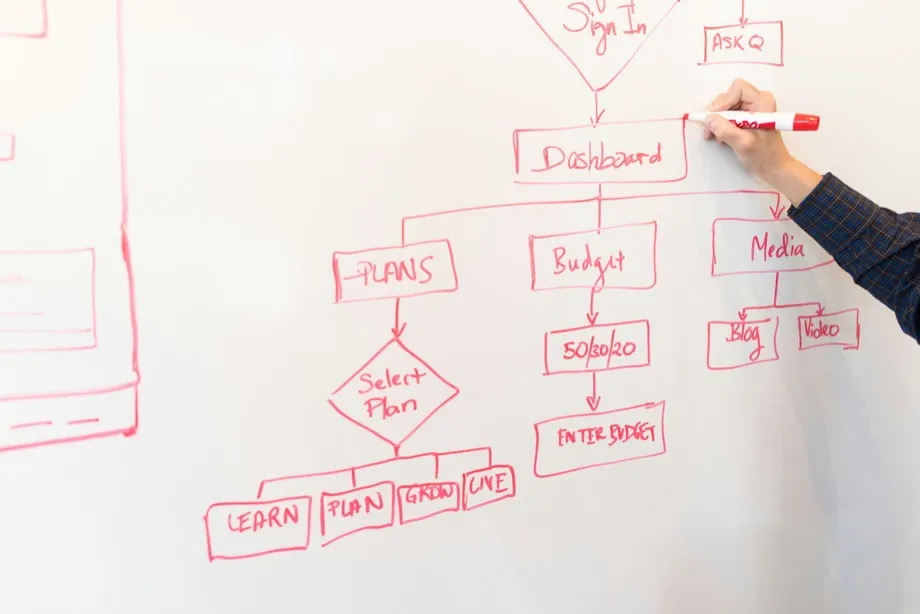
A hand drawing an app flow diagram in red marker on a whiteboard, with a dashboard branching into plans, budget and media screens.
MVPs and new products
A first version that proves the idea with real users, built so the second version does not start from scratch.
Internal tools and platforms
The systems your team runs on every day — operations dashboards, admin portals, workflow tools and reporting.
APIs and integrations
Typed, documented APIs and the integration work that connects systems never designed to talk to each other.
How we work

How an engagement runs

  1. Stage 01 Workshop

    We start with the problem, the constraints, the users, and what success has to look like. You leave with a roadmap you can act on and a first slice of scope small enough to ship and learn from.

  2. Stage 02 Architecture

    Decisions get made in the open and written down in the form of Architecture Decision Records (ADRs), so the reasoning outlives the conversation. Typed boundaries, deployment shape and integration contracts are settled while they are still cheap to change.

  3. Stage 03 · ongoing Development

    Short cycles with a working system at the end of each one. You see progress in the product, not in a status report. Priorities shift, so scope is re-cut against outcomes rather than defended for its own sake.

  4. Stage 04 Release

    The first slice goes to production behind the pipeline that will carry every release after it. Observability and rollback are in place before they are needed, not after the first incident.

  5. Stage 05 · ongoing Support

    The system stays healthy: monitoring, dependency updates, incident response and the unglamorous maintenance that keeps a codebase cheap to change. Keeping it running does not require keeping us on retainer.

  6. Stage 06 · ongoing Feature development

    New work enters the same cycle rather than a separate one. The roadmap keeps moving, re-forecast against a running system instead of against a document.

Scope

What's included

Every engagement covers these, whether or not they appear in the statement of work.

Discovery & design

  • Product discovery & roadmapping
  • Software architecture & system design
  • Database design & data modelling

Build

  • Backend services & typed APIs
  • Web application development
  • Cloud infrastructure & deployment pipelines
  • Third‑party & legacy system integration
  • Automated testing & QA

Run

  • Security review & observability
  • Performance optimisation
  • Post‑launch support & maintenance
Stack

Technologies we work with

  • TypeScript
  • React
  • Next.js
  • Astro
  • JavaScript
  • SolidJS
  • NestJS
  • Java
  • Spring Boot
  • Figma
Engineering practice

How we build, and what that costs you later

Four decisions that determine whether the system stays cheap to change.

Built to be maintained, not just delivered

The expensive part of software is changing it two years later, once the person who wrote it has moved on. So: typed interfaces that fail at compile time rather than in production, tests treated as part of the work rather than a phase that gets cut, observability wired in early, and modular boundaries. Handover is part of the deliverable, not a reason to keep us on retainer.

Integration is usually the real project

Very little software gets built on empty ground. There is an ERP, a payment provider, a legacy service one person understands, and a spreadsheet doing something load-bearing that nobody has admitted to yet. We treat those seams as design work: what each system is authoritative for, where data may be duplicated, and how failure between systems stays visible instead of silent.

Scaling when it actually matters

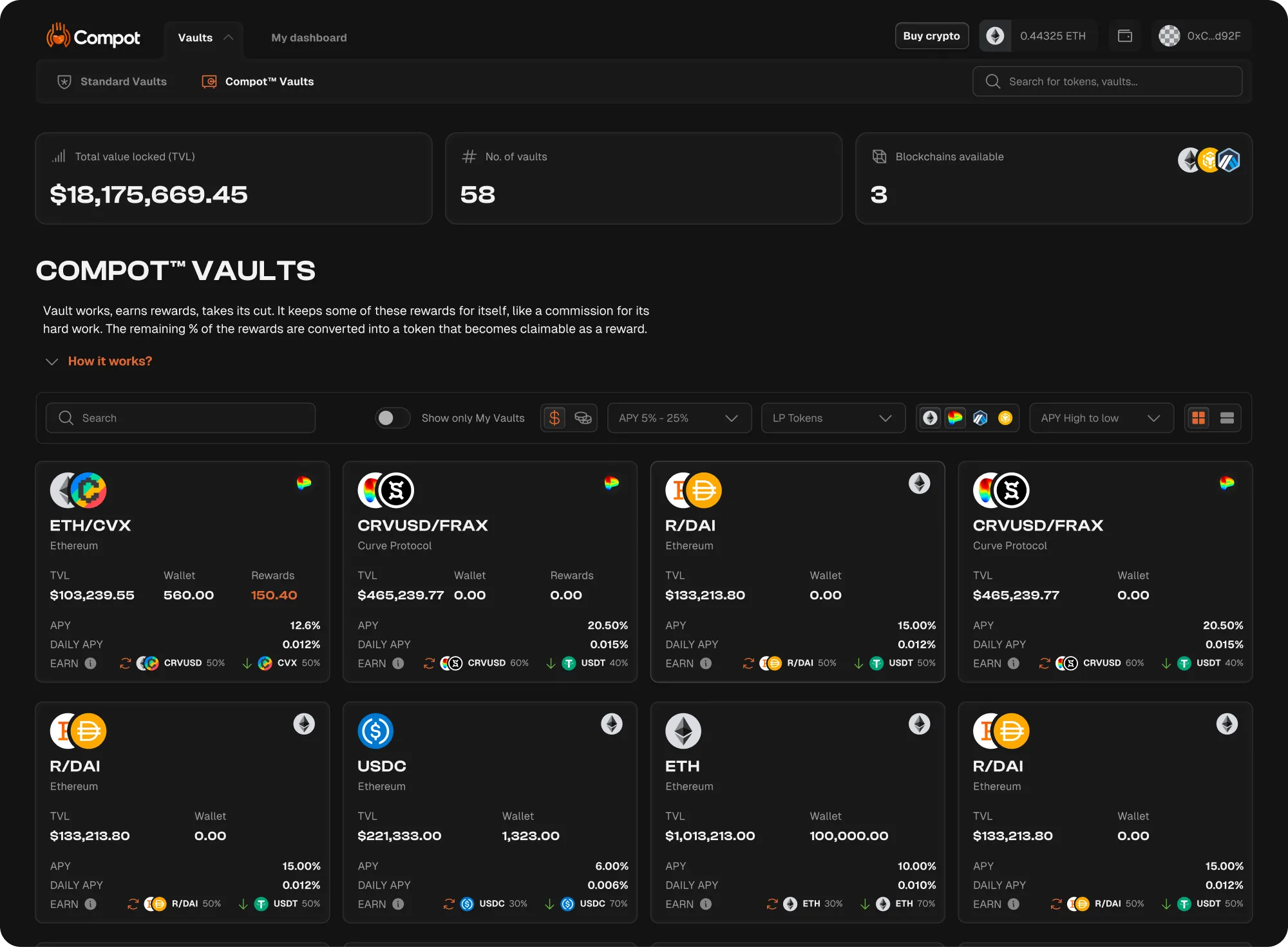
Architecture built for traffic that never arrives is more complex, slower to change and harder to hire for. We design for the load you can forecast and leave seams where growth would go — a queue boundary, a read replica, a service split. Then we measure before we tune. Compot ran a sub-250 ms p95 at launch, which was a measured target rather than a marketing number.

Modernising software you already depend on

Most systems are not replaced. They get extended past the point where extending them is safe. We move functionality out in slices that each ship independently, so the business keeps running while the architecture changes underneath it. A rewrite is the most expensive way to discover what your current system actually does.
Track record

Deep Domain Expertise

What carries across those industries is not domain trivia, it is the class of problem.

Domains we have shipped into

  • Audited access

    A realtime audit log, interconnected with the Identity layer for auditing and compliance.

  • Human in the loop

    Output a clinician signs off, inside the tooling they already use.

  • Interop as a constraint

    HL7 and FHIR shaped by what the receiving system will actually accept.

  • Data minimisation

    Records that carry only what the task needs, for only as long as it needs it.

Client feedback

We are very happy with our decision to work with Programium. Their expertise and attention to detail made a significant impact on our project.

Giulio Polverelli
Giulio Polverelli
Co-Founder, Compot
;
FAQ

Custom software development, answered

It depends on scope, and any number quoted before discovery is a guess. What we can commit to is how we keep it predictable: we scope a first slice small enough to ship, price that, and re-forecast the rest once there is a working system to reason about.

A focused first release is usually weeks rather than quarters. Our Compot engagement ran 20 weeks across 10 sprints from discovery to production. Longer programmes get broken into releases that each stand on their own.

Yes. Our team embed alongside in-house engineers as often as we deliver end-to-end, and we regularly act as the delivery partner for other agencies.

We offer flexible post-launch support and maintenance packages. We also hand over documented architecture and automated tests, so keeping the system healthy does not require keeping us.

In-house makes sense when the work is permanent and you can win the hiring race. When you need senior capacity now, nearshore delivery from Athens gives you a specialist team in a nearby time zone without the recruitment cycle or the long-term overhead.
Let’s Build What Matters

Have something that needs building?

Tell us what you are working on. In a free discovery call we go through your requirements together, and you hear plainly what it would take to build.
Book a discovery call Arrow icon
Programium full logo letters white
Driven by your success, powered by purpose.
[email protected]

Our Office

Greece Leoforos Kifisias 44 15125 Athens